COP17: the world’s first check on its 2030 nature goals finds it falling behind
Four years after countries promised to halt nature loss by 2030, a UN report finds fewer than half of their national targets on track. As 196 governments meet in Yerevan, Greenly charted the numbers behind the first global review: the 23-target scorecard, the race to protect 30% of the planet, and the money that has not arrived.
By Samarth DhamaniPublished 17 October 202610 min read
<50%Share of national targets that countries say are on track
1 of 23Global targets rated “highest” for relative progress
18.5%Of the world’s land officially protected or conserved, against a goal of 30%
~$16bnInternational public nature finance a year, short of the $20bn promised for 2025
On Monday, governments from 195 countries and the European Union open the UN Biodiversity Conference, COP17, in Yerevan, Armenia. It runs until 30 October.1,4 Its main job is one the world has never done before: the first global review of progress on the Kunming-Montreal Global Biodiversity Framework, the agreement adopted in December 2022 that set 23 targets to halt and reverse the loss of nature by 2030.1
The evidence for that review arrived on 15 October. The UN’s State of Biodiversity Action report, launched by Secretary-General António Guterres, found widespread engagement but slow results: “fewer than half of national targets assessed by Parties are on track.”1
“The report shows that many of the critical elements of progress, including finance, capacity, cooperation and data – are still missing in action. Nature won’t thrive on good intentions.”
The scorecard: one target clearly ahead, three furthest behind
The report rates every target for “relative progress”, comparing the 23 targets with each other rather than against their 2030 finish lines. Half of the score comes from how well countries’ own targets cover the global one and whether countries say they are on track; the other half comes from measured indicators.2 Even the best-rated target is not on course: the report states that “none of the targets present a fully positive picture.”2
Figure 1
How the 23 global biodiversity targets compare
Relative progress on each target of the Kunming-Montreal Global Biodiversity Framework, as rated in the UN’s first global report. Ratings compare targets with each other; none is rated as on track to be met.
Source: Secretariat of the Convention on Biological Diversity, State of Biodiversity Action, summary, figure 1. Target titles shortened by Greenly. Chart: Greenly.View the data
The one target rated highest is Target 8, on limiting the impact of climate change on biodiversity and building resilience. The three rated lowest are Target 18, cutting subsidies that harm nature by at least $500 billion a year; Target 19, raising $200 billion a year for biodiversity; and Target 23, gender equality in biodiversity action.2 The pattern is consistent: targets about conserving nature directly score better than targets that require change from finance ministries, businesses and consumers. As the report puts it, “targets requiring action beyond environment ministries” are “among those furthest behind.”1
30 by 30: closer on land, far behind at sea
The best-known promise in the framework is Target 3: to protect or conserve 30% of the world’s land and 30% of its oceans by 2030. On the latest official count, 18.5% of land is covered.8 At sea, coverage passed 10% in April 2026, an increase of about 5 million square kilometres in two years, but still a third of the goal.5 Only 1.66% of the high seas, the ocean beyond any country’s control, is protected.5
Countries’ own plans will not close the gap. According to Guterres, current national commitments would protect 26% of land and 12% of marine ecosystems by 2030, well short of 30%.3
Figure 2
The world is protecting more nature, but not fast enough for 30% by 2030
Share of land and inland waters, and of the ocean, inside protected areas and other recognised conservation areas, with the coverage countries’ current plans would reach by 2030.
LandOceanProjection if national plans are met
Sources: UNEP-WCMC and IUCN, Protected Planet Reports 2020 and 2024 and April 2026 update; O’Neill et al., Nature (2026); UN Secretary-General, via Climate Home News. Methods changed between reports, so small differences between years should be read with care. Chart: Greenly.View the data
The official count may also understate what already exists. A study published in Nature on 15 October, led by researchers at the University of Kent, combined global data with national records and estimated that 26.8% of land was in some form of conservation area, though many habitats such as grasslands and shrublands have little protection.8 Area alone is not the point, the authors stress. “Increasing the area of land under conservation will do little unless these sites are effectively and fairly managed,” said Bob Smith, director of the university’s Durrell Institute of Conservation and Ecology.8 On that measure the gap is starker: only 1.3% of the ocean is covered by protected areas whose management effectiveness has been assessed and reported.5
The money gap
Target 19 promised that international biodiversity finance flowing to developing countries would reach at least $20 billion a year by 2025 and $30 billion by 2030. The UN report concludes that the 2025 milestone “was likely not met”, although a final verdict needs complete data.2 OECD figures put the real flow at about $16 billion a year between 2023 and 2025.3 The wider goal of $200 billion a year from all sources, public and private, is further away: the OECD estimates current spending at $78–91 billion a year, a shortfall of around 60%.4
Figure 3
Promised versus delivered: biodiversity finance
US$ billion a year. Dashed bars are the Target 19 goals.
International public finance for developing countries
Biodiversity finance from all sources
Sources: OECD estimates, as reported by Climate Home News (international finance) and GIZ (all sources); targets from the Kunming-Montreal Global Biodiversity Framework. Chart: Greenly.View the data
Money flowing the wrong way dwarfs both. UN Environment estimates that for every dollar spent protecting nature, $30 goes towards destroying it.3 The UN’s biodiversity chief, Astrid Schomaker, pushed back on claims that funds simply do not exist: “if you hear there is no finance, please do not believe it.”3 Who should pay remains contested. Saudi Arabia and Qatar rejected an EU proposal to widen the group of donor countries, and China said doing so should not weaken developed countries’ responsibility.3 A separate fund agreed at COP16 in Colombia, under which companies are expected to pay when they use genetic data from nature, “remains empty” apart from a small symbolic sum, according to Germany’s development agency GIZ.4
Plans are in. Results are not.
On paper, engagement is far higher than under the previous set of global goals. When the report was prepared, 162 Parties, or 83%, had set national targets aligned with the framework, each covering 22 of the 23 global targets on average. At the final review of the earlier Aichi targets in 2020, only about half had done so.2 Close to 60% have produced new national biodiversity strategies and action plans, over 70% have submitted national reports, and Indigenous peoples, local communities, subnational governments, businesses and civil society groups have registered about 5,000 commitments.1
Figure 4
More countries have plans than ever. Fewer than half say they are on track
Share of the 196 Parties to the Convention on Biological Diversity, and of the national targets they assessed. Values marked ~ or < are given approximately in the report.
Source: Secretariat of the Convention on Biological Diversity, State of Biodiversity Action summary and press release, October 2026. Chart: Greenly.View the data
The report also points to gaps in what is measured. No country reported on every headline indicator, and the methods for two of them are not yet working. Small island developing states, whose constraints the report says are likely to be even more pressing, are under-represented because fewer of their reports arrived in time.2
The host country
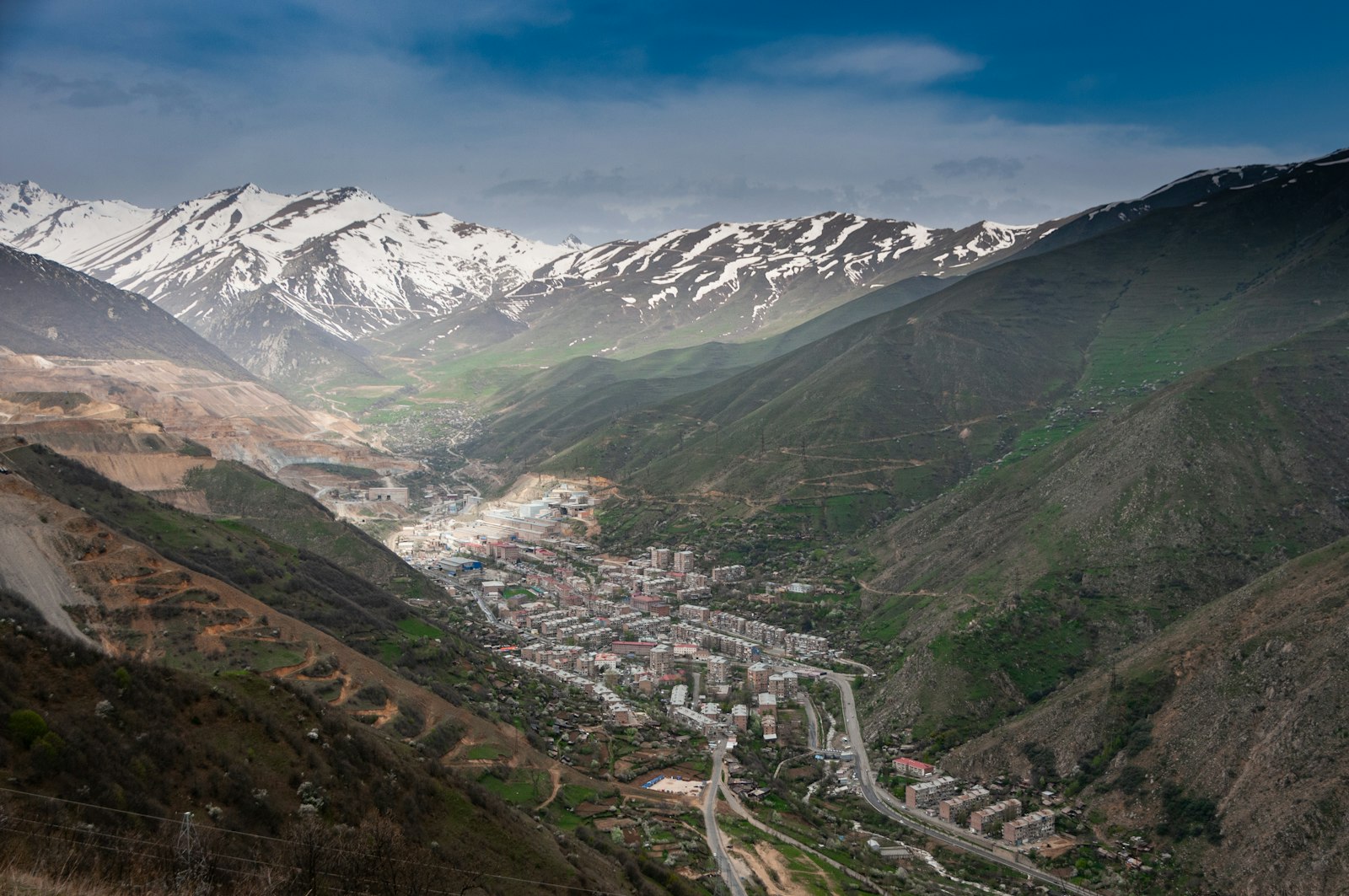
Kajaran, in southern Armenia. The terraced slopes on the left belong to the open-pit mine beside the town. Photo: Ani Adigyozalyan / Unsplash.
Armenia, a mountainous country in the South Caucasus, faces the same tensions it is hosting. An analysis for the Heinrich Böll Foundation ahead of the summit described “competing interests with the mining and energy sectors” and noted that “extractive industries, small hydropower plants, and deforestation impact local ecosystems,” alongside “a lack of reliable data on forests and other biological resources.”9
“COP 15 gave us the framework. COP 16 advanced important mechanisms for its implementation. COP 17 must now help us determine where we stand, what is working, where progress is falling short and what must change to accelerate implementation.”
Hambardzum Matevosyan, Armenia’s Minister of Environment and incoming COP17 President1
What COP17 will decide
The global review is the summit’s central outcome, a nature equivalent of the Global Stocktake held under the climate talks.3 Governments are expected to agree guidance on raising ambition before 2030, and campaigners and the Armenian government plan a call to action on reforming harmful subsidies.3 The UN Environment Programme’s Inger Andersen linked the review to the wider crisis: “We cannot tackle climate change, biodiversity loss and pollution in isolation.”1
Closer to home
Restoration (Target 2). Mangroves protect coasts and store carbon. Read about Jubail Mangrove Park in Abu Dhabi.
Species (Target 4). Wildlife populations have fallen by an average of 73% since 1970, but some species are recovering: the Living Planet Index analysis.
What to watch
COP17 closes on 30 October. The key questions are whether governments agree concrete steps to close the finance gap, whether countries commit to strengthening national plans that fall short of 30 by 30, and whether the summit makes progress on cutting harmful subsidies, the target furthest behind. Greenly will publish an analysis of the outcome.
About this analysis. Figure 1 reproduces the overall “relative progress” ratings from figure 1 of the report summary; Greenly shortened the target titles. The ratings rank targets against each other and are not a measure of whether a target will be met. Figure 2 combines figures from different editions of the Protected Planet database; coverage figures are revised as countries report new areas, and the ocean figure for 2024 has been reported as both 8.4% and 8.6%. The 2030 projections are the UN Secretary-General’s figures for current national commitments. Finance figures are OECD estimates as reported by Climate Home News and GIZ; the range for all sources is shown at its upper end. Values that the report gives approximately (“close to”, “over”, “fewer than”) are charted at that value and labelled with ~, + or <.