Overfishing
A third of the world's assessed fish stocks are now being caught faster than they can reproduce. Unlike a lot of environmental damage, this one is invisible until, quite suddenly, a fishery that supported generations simply doesn't recover.
The UN Food and Agriculture Organization tracks the state of the world's fisheries every two years in its State of World Fisheries and Aquaculture report. Its most sobering figure: roughly 34% of assessed global fish stocks are fished at biologically unsustainable levels — more than triple the share recorded in the mid-1970s. Global wild fish catch has been essentially flat since the late 1980s, not because demand stopped growing, but because there simply isn't more fish left to catch at a sustainable rate.
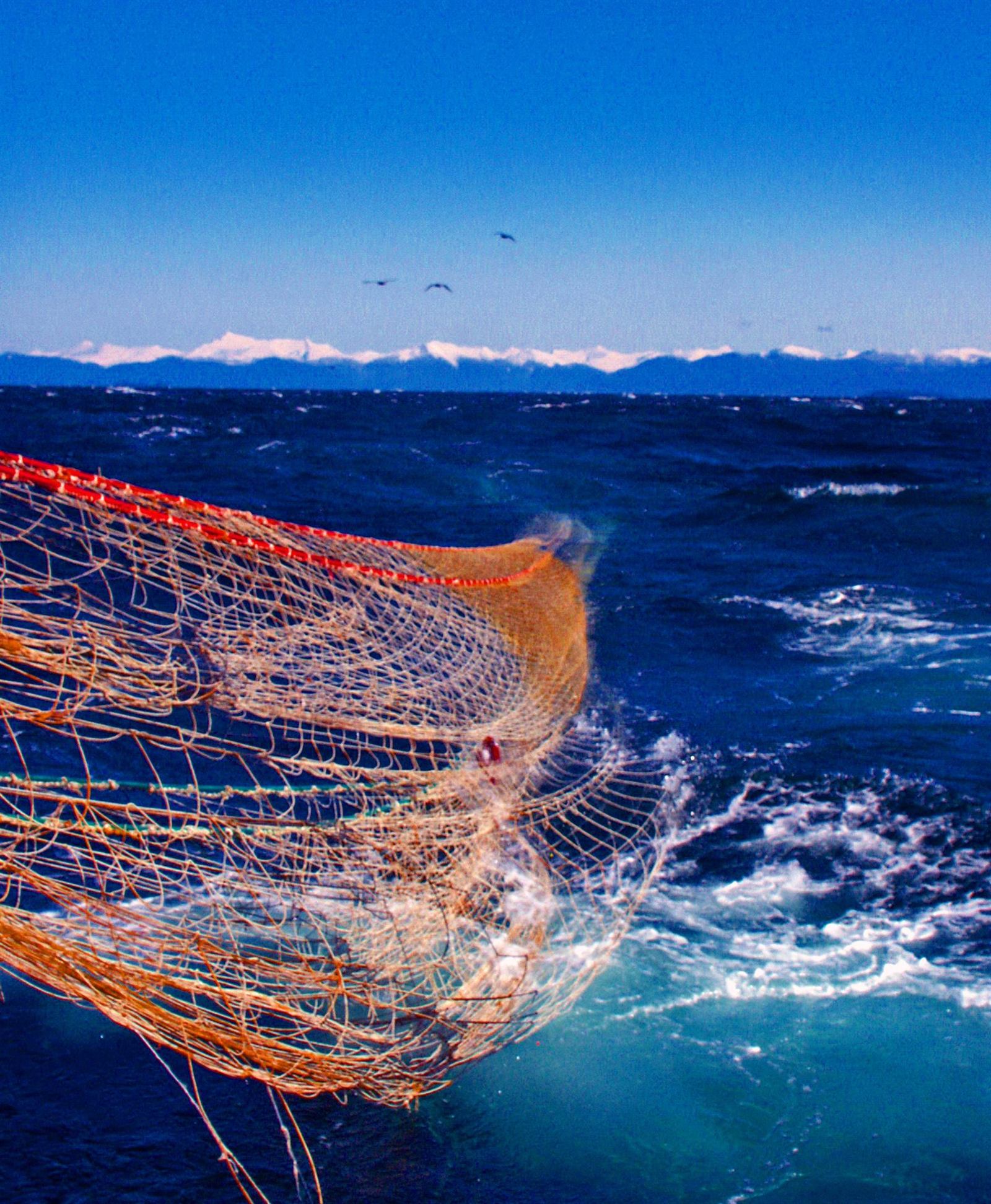
Modern fishing fleets use sonar fish-finding technology, GPS-guided nets the size of football stadiums, and refrigerated factory ships that can stay at sea for months — a level of efficiency fish populations never evolved to withstand. Government fuel and vessel subsidies, estimated at tens of billions of dollars a year worldwide, keep fleets profitable even when catches decline, effectively subsidising the depletion of the same stocks that fishing communities depend on long-term.
Bycatch compounds the problem: indiscriminate gear like bottom trawls and longlines catch and kill large volumes of non-target species — sea turtles, sharks, seabirds — for every tonne of the intended catch, disrupting ocean food webs well beyond the target fish population itself.
The best-known cautionary tale is the Grand Banks cod fishery off Newfoundland, Canada — one of the richest fishing grounds in history, supporting fishing communities for roughly 500 years. Decades of industrial overfishing collapsed the stock so severely that Canada imposed a total moratorium in 1992, costing about 30,000 jobs overnight. Cod populations still haven't recovered to their historic levels three decades later, illustrating how slowly — or incompletely — a depleted marine population can bounce back once pushed past a certain point.
Fisheries management isn't hopeless — where it's been seriously applied, stocks have recovered. Science-based catch quotas, properly enforced, have rebuilt stocks in places like the United States and parts of Europe. Marine protected areas that ban or limit fishing give ecosystems room to regenerate and, counterintuitively, often increase catches in surrounding waters as fish populations spill over. Certification schemes like the Marine Stewardship Council give consumers a way to identify sustainably caught seafood, creating market pressure alongside regulation.